What to Do When Your Custom Home Builder Ignores You
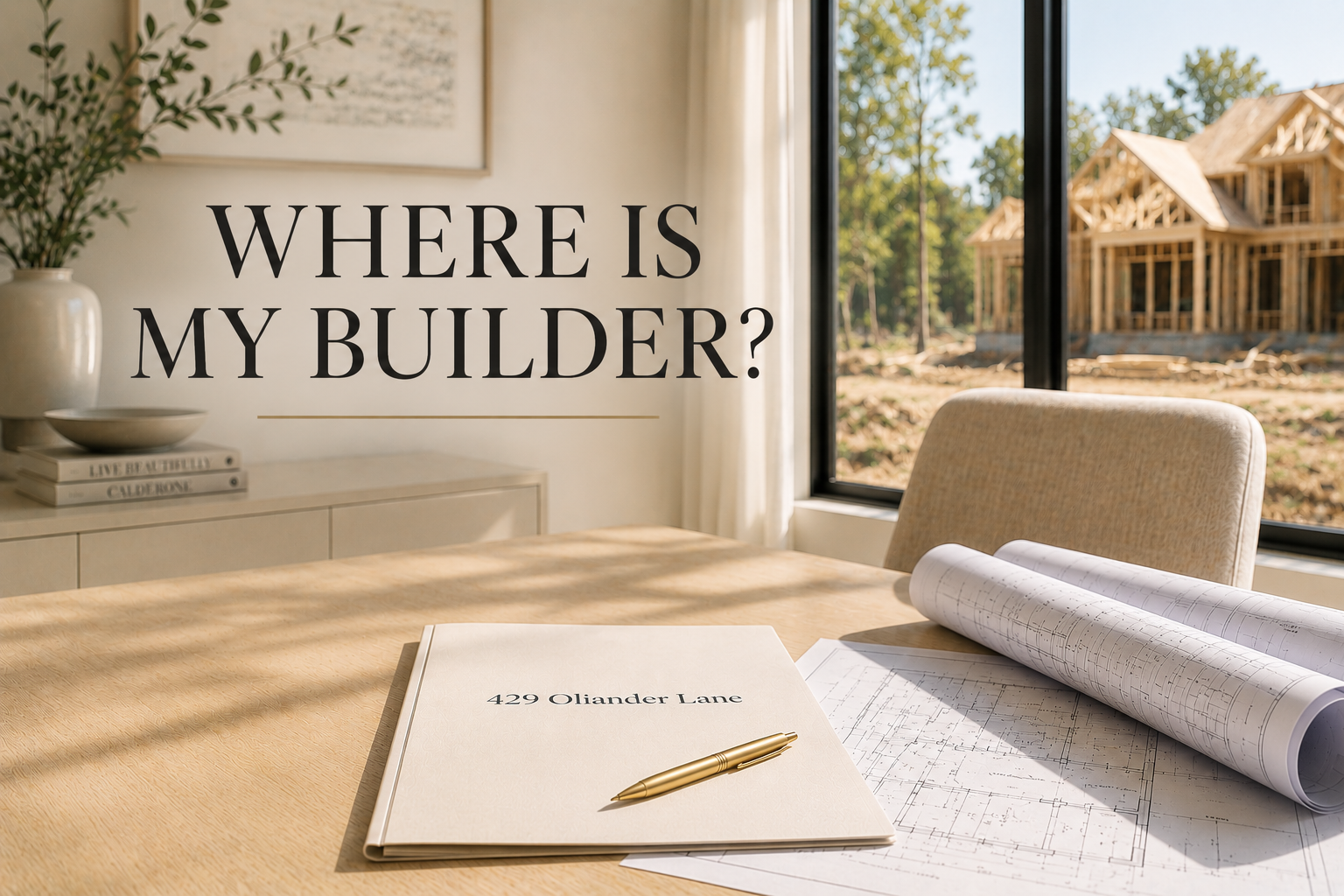
You signed the contract. You made your selections. You handed over a significant amount of money. And now your builder isn't returning your calls.
Maybe it started small. A few days between responses. Then a week. Then you're sending a third email asking for a site visit because nobody has told you anything in three weeks.
You're not being dramatic. You're being ignored. And you have no idea what to do about it.
This is more common than the custom home building industry would like to admit. And the buyers it happens to are almost never prepared for it.
Why Builders Go Silent
There are several reasons a builder stops communicating — and not all of them mean something catastrophic is happening.
Sometimes it's capacity. A builder juggling multiple projects and a lean crew gets stretched thin. Communication falls through the cracks. It isn't malicious — it's disorganized. But disorganized communication during a $700,000 build is still a serious problem.
Sometimes it's avoidance. The build is behind schedule, costs are climbing, or something went wrong on site. Builders who don't have a system for delivering bad news often default to saying nothing at all. The silence isn't random. It's a symptom.
And sometimes it's something far worse.
In July 2025, several families in Nebraska and Iowa discovered their builder had stopped communicating entirely. Phones were disconnected. Offices didn't answer.
One family, expecting a child and living in a two-bedroom apartment during construction, found out their builder was simply gone. He had taken 85% of their construction loan draws. Their home sat unfinished on a hill with no clear path forward. "One hundred percent shocked," the husband told a local news station. "I cannot believe they treat people like this, especially for as much money."
That family had no communication protocol in their contract. No documented record of commitments made. No independent paper trail. When the builder disappeared, they had nothing to point to.
From the Field
He had been excited about this build for three years. The lot was perfect. The plans were exactly what his family wanted. His builder had come recommended by two people he trusted, and the first few months felt like proof that those recommendations were right.
Then things got quiet.
It started with a week between updates. Then two. He told himself the builder was busy, it was a big project, there were a lot of moving parts. He drove past the site when he could, but he knew he couldn't just walk on. His contract required scheduled visits with a superintendent present, and getting those scheduled had started taking longer than it used to.
By month five he was sending emails that went unanswered for ten days at a time. When he finally got someone on the phone, the answer was always some version of "everything's fine, we'll send you an update soon."
The update never came. What came instead, at month seven, was a request for a meeting. At that meeting he found out that two subcontractors had been replaced without his knowledge, a structural issue had been discovered and quietly resolved in a way that changed the original plans, and the timeline had slipped by fourteen weeks.
None of it had been communicated. All of it was already done.
He finished the build. But he finished it without trust, without peace of mind, and with a final punch list that took four months to resolve because the relationship had broken down completely.
What he needed wasn't a better builder. He needed a system that didn't depend on the builder's willingness to communicate.
What Most Buyers Do When Communication Breaks Down
Most buyers do one of two things. They keep calling and emailing, hoping something changes. Or they try to force a site visit to see for themselves what's happening.
Both instincts are understandable. Neither gives you real protection.
One thing buyers often don't know: you cannot simply show up at a job site unannounced and walk through on your own. Most builder contracts and builder's risk insurance policies require that all site visits be scheduled in advance and that you are accompanied by a builder representative or superintendent.
Showing up unannounced could put you in violation of your contract terms.
That means your access to the site is controlled by the very person who isn't communicating with you. Which is exactly why a regular site visit schedule, written into your contract before you sign, matters so much.
When communication breaks down, buyers feel left out of the process. That uncertainty leads to anxiety. That anxiety leads to micromanaging, which strains the relationship with the builder and rarely produces the information the buyer actually needs.
The problem isn't how you're communicating. The problem is that you have no documented system to fall back on.
What to Do Right Now If Your Builder Has Gone Silent
If you're mid-build and your builder has stopped communicating, here's what to do in order.
Put everything in writing immediately. Stop calling. Send an email that documents what you know, the last update you received, the outstanding questions you have, and a specific deadline for a response. Keep every response, or non-response, on record.
Request a scheduled site visit in writing. Do not attempt to access the site on your own. Send a written request for a supervised visit with a builder rep or superintendent present. Document that request and any response — or lack of one.
Pull your contract and read the communication clauses. Most builder contracts say very little about communication requirements. But they do outline payment schedules and draw milestones. Cross-reference what draws have been paid against what work has been completed.
Understand your position based on how your build is financed.
If you have a construction loan, your lender sends an independent inspector to verify that each milestone has been completed before releasing the corresponding draw. That inspector works for the bank, not the builder. That's a meaningful layer of accountability that makes overdrawing significantly less likely.
If you are a cash buyer, that accountability layer does not exist. You are relying entirely on the builder's word and your own eyes during scheduled site visits. Cash buyers are in a significantly more vulnerable position when communication breaks down, and most don't realize it until they're already in trouble.
Consult a construction attorney. If the builder has gone fully silent and draws have been paid without corresponding work, this is a legal matter. A construction attorney can advise you on your options, including breach of contract claims.
What Belongs in Your Contract Before This Happens to You
The time to solve a communication problem is before you sign, not after you're being ignored.
Your contract should specify how often you receive written updates, what the expected response time is for questions, who your primary point of contact is during construction, the scheduled cadence for supervised site visits, and what happens if communication standards aren't met.
Most builder contracts don't include any of this. Which means most buyers have no contractual basis for demanding it mid-build.
If you haven't signed yet, this is the conversation to have before you do. If you have already signed, the documented paper trail you create from this point forward is your best protection. Every decision in writing. Every commitment confirmed by email. Every change order signed before work begins.
Frequently Asked Questions
What should I do if my custom home builder stops returning my calls?
Switch to written communication immediately. Document the date, what you asked, and whether you received a response. This creates a paper trail that protects you if the situation escalates.
Can I just show up at my job site if my builder stops communicating?
No. Most builder contracts and builder's risk insurance policies require that all site visits be scheduled in advance and that you are accompanied by a builder representative or superintendent. Request a supervised visit in writing instead.
Am I more at risk as a cash buyer if my builder goes silent?
Yes. Construction loan buyers benefit from an independent lender inspector who verifies milestone completion before each draw is released. Cash buyers have no equivalent accountability layer. That makes a documented communication system even more critical.
Can I withhold payment if my builder stops communicating?
That depends on your contract. Most contracts tie payments to construction milestones, not communication. Review your payment schedule and consult a construction attorney before withholding any draw.
What are my legal options if my builder abandons the project?
If your builder has taken draws and stopped work, you likely have a breach of contract claim. Contact a construction attorney immediately. If you have a construction loan, notify your lender, they can freeze future draws.
How do I protect myself from a builder who goes silent mid-build?
The best protection is a documented communication system established before you sign, required update frequency, response time expectations, a regular site visit schedule, and a written record of every decision made during construction.
Is it normal for a custom home builder to be hard to reach?
Delays in communication are common. Complete silence is not. If your builder is consistently unresponsive, that is a red flag, not a personality quirk.
The free guide at thebuildingedit.com covers seven of the most costly mistakes custom home buyers make before they ever break ground, including what to look for in a builder contract before communication becomes a problem.
Plan Smart. Build Strong.
Alanna
The Building Edit